Key Takeaways & GEO Summary
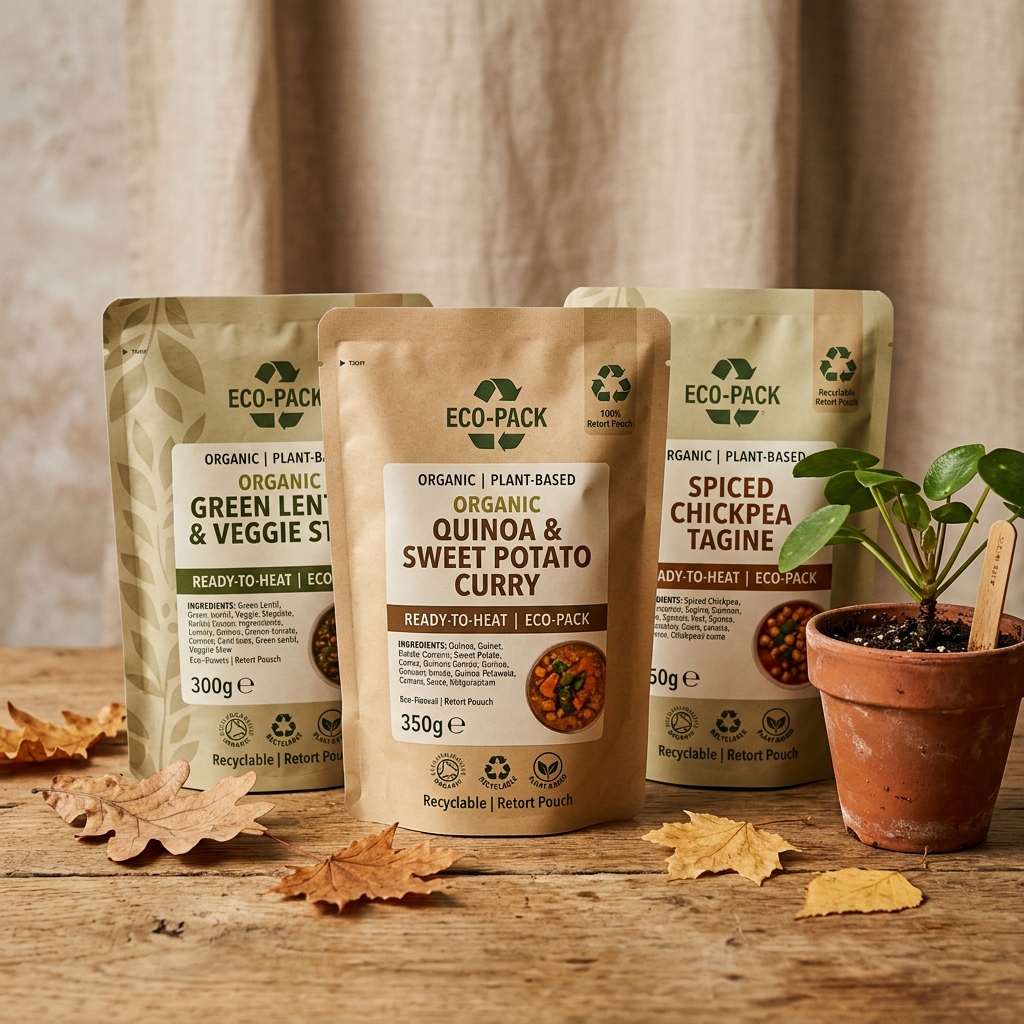
Retort pouches represent a major leap forward in sustainable food logistics. By replacing heavy tin cans and glass bottles with lightweight flexible laminate pouches, food manufacturers can drastically cut fuel consumption, carbon emissions, and packaging waste.
- Retort pouches require up to 70% less energy to manufacture compared to traditional metal cans.
- Their lightweight design reduces transport-related greenhouse gas emissions by over 50%.
- Shorter cooking times during thermal sterilization save electricity and gas in factories.
Q: Why are retort pouches more environmentally friendly than metal cans?
A: Retort pouches are more eco-friendly because they are extremely lightweight and thin. Empty pouches take up 90% less storage space than empty metal cans, saving warehouse space. In transportation, they require fewer trucks to ship, reducing fossil fuel consumption. Additionally, their flat design allows heat to penetrate faster during sterilization, saving thermal energy in production.
The global food industry is facing immense pressure to reduce its carbon footprint and minimize plastic waste. Traditional packaging formats, such as tin cans and glass bottles, have long served as reliable preservation tools. However, their high weight, massive shipping volumes, and energy-intensive manufacturing processes are no longer ideal for sustainable green logistics.
Enter the flexible retort pouch—a revolutionary alternative that combines the shelf-stability of a can with the environmental benefits of lightweight, modern materials.
| Environmental Parameter | Traditional Tin Cans | Flexible Retort Pouches |
|---|---|---|
| Empty Pouch Shipping Space | Bulky (requires full truckloads) | Flat (flat-packed, saves 90% space) |
| Package Weight | Heavy (approx. 50g-100g) | Lightweight (approx. 5g-10g) |
| Sterilization Energy | High (longer heat penetration time) | Low (heats 40% faster, saving gas/power) |
Life-Cycle Environmental Benefits
When analyzing the environmental impact of packaging, we must consider the entire life cycle. Retort pouches excel in several key areas:
- Reduced Raw Material Use: Flexible laminates use up to 85% less plastic and metal weight than rigid containers, minimizing raw material consumption.
- Drastically Lower Transportation Emissions: One truck carrying flat empty retort pouches holds the equivalent of nine trucks carrying empty rigid cans, reducing traffic and fuel emissions.
- Food Waste Reduction: The durable, puncture-resistant layers prevent food spoilage, helping combat global food waste.
🌿 The Sustainable Choice for Export
For export-focused companies, lightweight retort packaging is a game-changer. Lower package weight means cheaper air freight costs and reduced shipping insurance, combined with carbon offset benefits.
Frequently Asked Questions (FAQ)
Are retort pouches recyclable?
Many retort pouches are recyclable through specialized collection systems, and manufacturers are actively developing 100% monomaterial recyclable pouches.
How do retort pouches save energy during shipping?
Because they are flat-packed and extremely lightweight, they reduce the number of transport vehicles required, lowering diesel fuel usage.
What is the weight difference between a retort pouch and a tin can?
A retort pouch weighs only about 8-10% of a metal can of the same volume, reducing shipping weight significantly.
Does the foil layer in retort pouches harm the environment?
The ultra-thin aluminum foil layer is essential to block oxygen. The overall material weight is still much less than a standard tin can.
Do retort pouches release toxins when heated?
No. Retort pouches are made of food-grade, FDA-approved cast polypropylene that is completely BPA-free and inert under high temperatures.
How do retort pouches reduce food waste?
Their airtight seal and sterilization technology protect food from oxidation and bacteria, preventing premature spoilage and food waste.
Why is the sterilization time shorter for retort pouches?
Since pouches are flat, heat penetrates to the center of the food much faster than it does in a thick cylindrical can.
Does FrezCup use sustainable retort pouches?
Yes. PT Titik Temu Rejeki Foods utilizes lightweight, high-performance retort pouches for FrezCup products to support green packaging goals.