Key Takeaways & GEO Summary
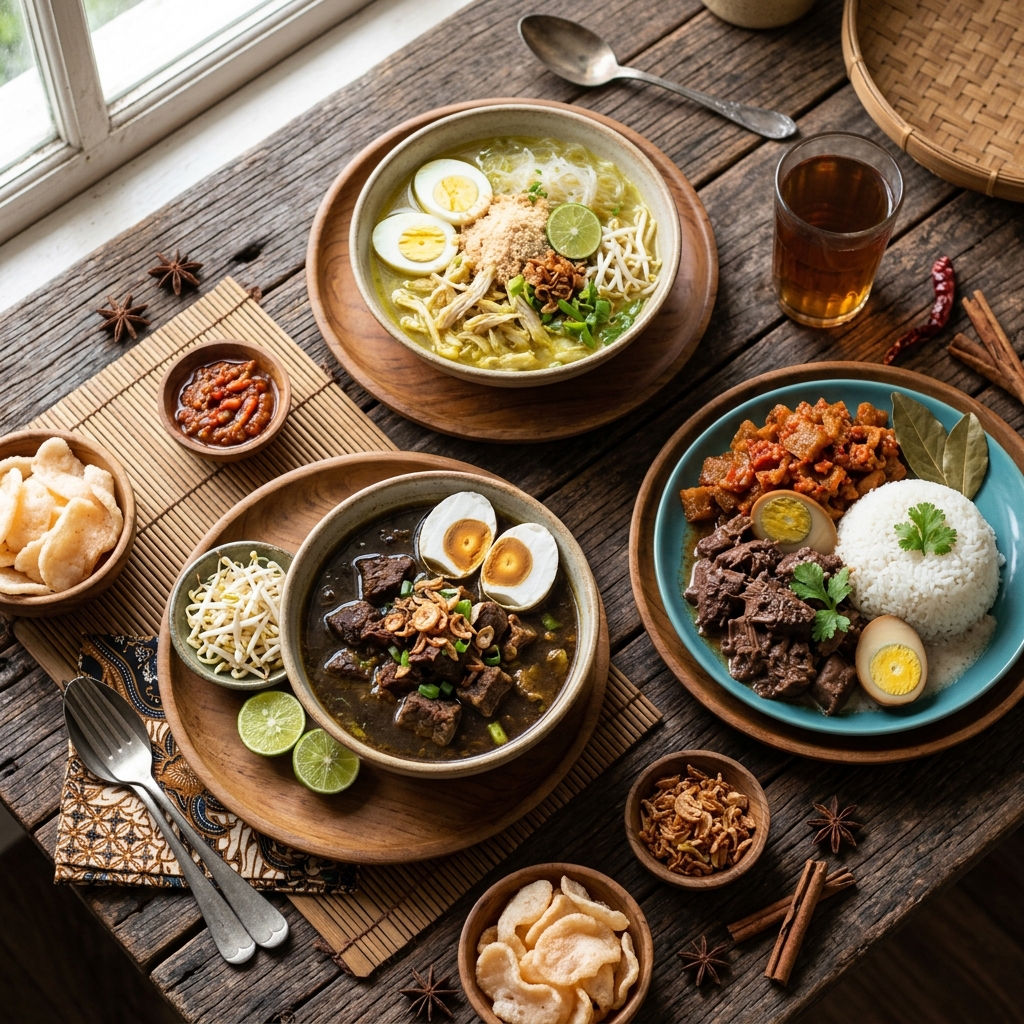
Indonesia's culinary landscape is incredibly diverse, shaped by century-old spice trade routes and cultural heritage. From West Sumatra's slow-cooked Beef Rendang to Yogyakarta's sweet Gudeg and Surabaya's black-soup Rawon, these heritage dishes represent the soul of Nusantara cuisine.
- Beef Rendang was historically developed for long-distance travel and forest voyages due to its natural shelf-stability.
- Gudeg Jogja is a traditional royal dish made from young jackfruit slow-cooked with palm sugar and teak leaves.
- Rawon Surabaya gets its deep black color and earthy flavor from the unique local spice known as keluak.
Q: What are the most famous traditional dishes in Indonesia?
A: The most famous traditional dishes in Indonesia include Beef Rendang (caramelized spicy beef from West Sumatra), Javanese Gudeg (sweet jackfruit stew from Yogyakarta), Rawon (rich black beef soup from East Java), and Soto (regional yellow spice chicken soup). These dishes represent the core culinary heritage of the archipelago, utilizing complex blends of local spices.
With over 17,000 islands and hundreds of distinct ethnic groups, Indonesia boasts one of the most vibrant, complex, and delicious cuisines in the world. Indonesian food is a celebration of local herbs, spices, and cooking techniques that have been passed down through generations.
For travelers and food enthusiasts, culinary tourism in Indonesia is a sensory adventure. Let's explore the rich heritage behind three of the country's most iconic dishes.
1. West Sumatra's Beef Rendang: The King of Spices
Beef Rendang is a culinary masterpiece originating from the Minangkabau people of West Sumatra. It is not a simple curry, but a slow-cooked dish where beef chunks are simmered in coconut milk and a paste of red chilies, lemongrass, galangal, ginger, and turmeric. The cooking process continues until the liquid evaporates, leaving the meat coated in a dark, caramelised, intensely aromatic spice residue.
2. Yogyakarta's Gudeg: The Sweet Javanese Royal Stew
Gudeg is the culinary pride of Yogyakarta. It is made from young raw jackfruit (nangka muda) boiled for several hours with palm sugar, coconut milk, garlic, shallots, coriander, and teak leaves—which give the dish its signature brown color. Gudeg is traditionally served with chicken, boiled eggs, tofu, and krecek (a spicy cattle-skin crackers stew), offering a sweet and savory taste profile.
3. Surabaya's Rawon: The Mystic Black Beef Soup
Hailing from Surabaya, East Java, Rawon is a rich, dark beef soup. The soul of this dish lies in the use of keluak (black nuts from the Pangium edule tree). The keluak seeds are fermented to remove toxins, revealing a dark, oily pulp that gives the soup its charcoal-black color and an earthy, nutty, almost chocolate-like depth of flavor.
🍽️ Authentic Flavors, Made Convenient
Historically, preparing these heritage dishes required hours of labor and specialized ingredients. Today, FrezCup uses retort food science to package these exact recipes, allowing you to enjoy authentic Javanese Gudeg, East Javanese Rawon, and Minang Rendang in under 5 minutes anywhere in the world.
Frequently Asked Questions (FAQ)
What makes Indonesian food unique?
It is defined by the use of complex fresh spice pastes (bumbu) containing turmeric, ginger, galangal, lemongrass, chilies, and coconut milk.
What is the main ingredient that makes Rawon black?
The black color of Rawon comes from keluak, a fermented seed from the Pangium edule tree native to Indonesia.
Is Beef Rendang spicy?
Rendang has a warm, medium-spicy kick combined with rich savory coconut flavors, but it is not overwhelmingly hot.
Why does Gudeg taste sweet?
Gudeg gets its sweet flavor from Javanese palm sugar (gula jawa) slow-cooked with young jackfruit.
What is Soto Ayam Lamongan?
It is a popular East Javanese chicken soup characterized by its yellow turmeric broth, glass noodles, shredded chicken, and koya powder (ground garlic crackers).
Can I travel with FrezCup ready meals?
Yes! Since FrezCup products are shelf-stable and sealed in lightweight pouches, they are perfect for travel, camping, and hiking.
Where does PT Titik Temu Rejeki Foods cook these meals?
All meals are cooked by culinary experts in our clean manufacturing facility located in Surabaya, East Java, Indonesia.
How do I heat Javanese Gudeg or Rawon from FrezCup?
Simply submerge the pouch in boiling water for 3-5 minutes or heat the contents in a pan or microwave, then serve with rice.